News
The Complex Painting Examination Laboratory is in the fortunate position to announce: in addition to the greatest art institutions of the world (such as Rijksmuseum, Getty Conservation Institute, Metropolitan Museum of Art), one of the high-tech measuring instruments of the 21st century will be available here, in Central Europe, Hungary.
Coming soon: non-destructive micro-XRF (X-Ray fluorescence) spectrometer, the latest instrument of the Complex Painting Examination Laboratory. We are planning to make this world-class service available here as early as November 2020.
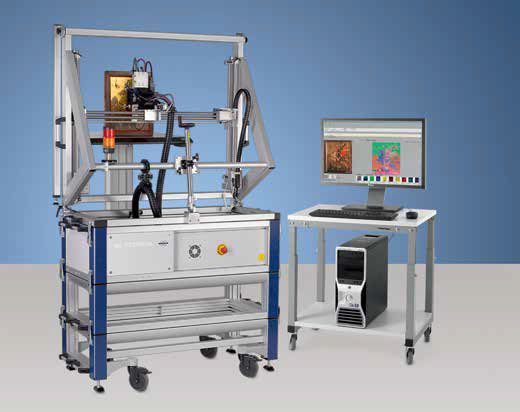
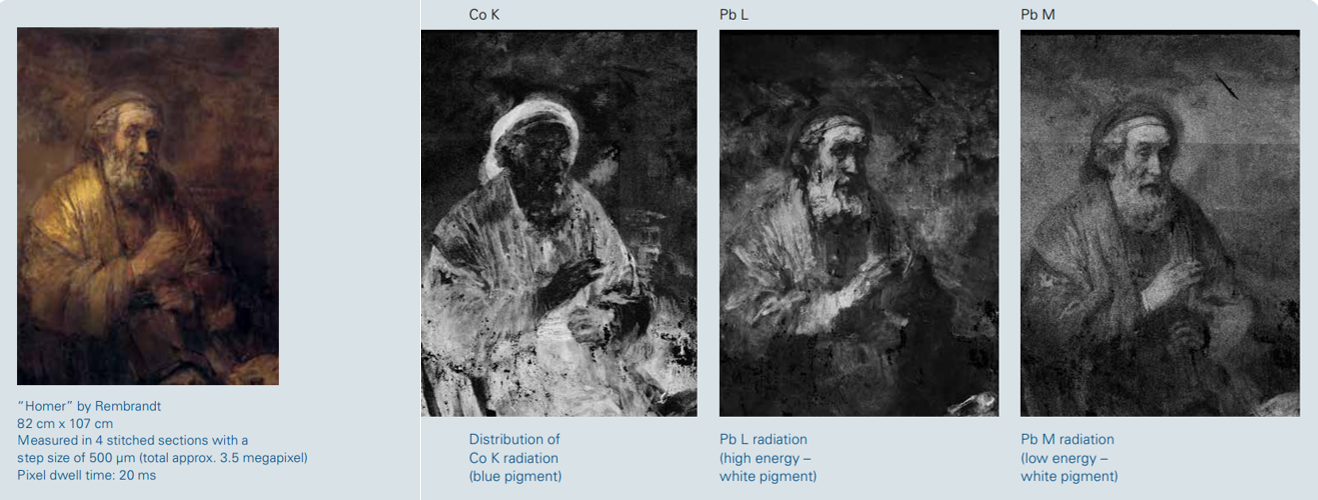
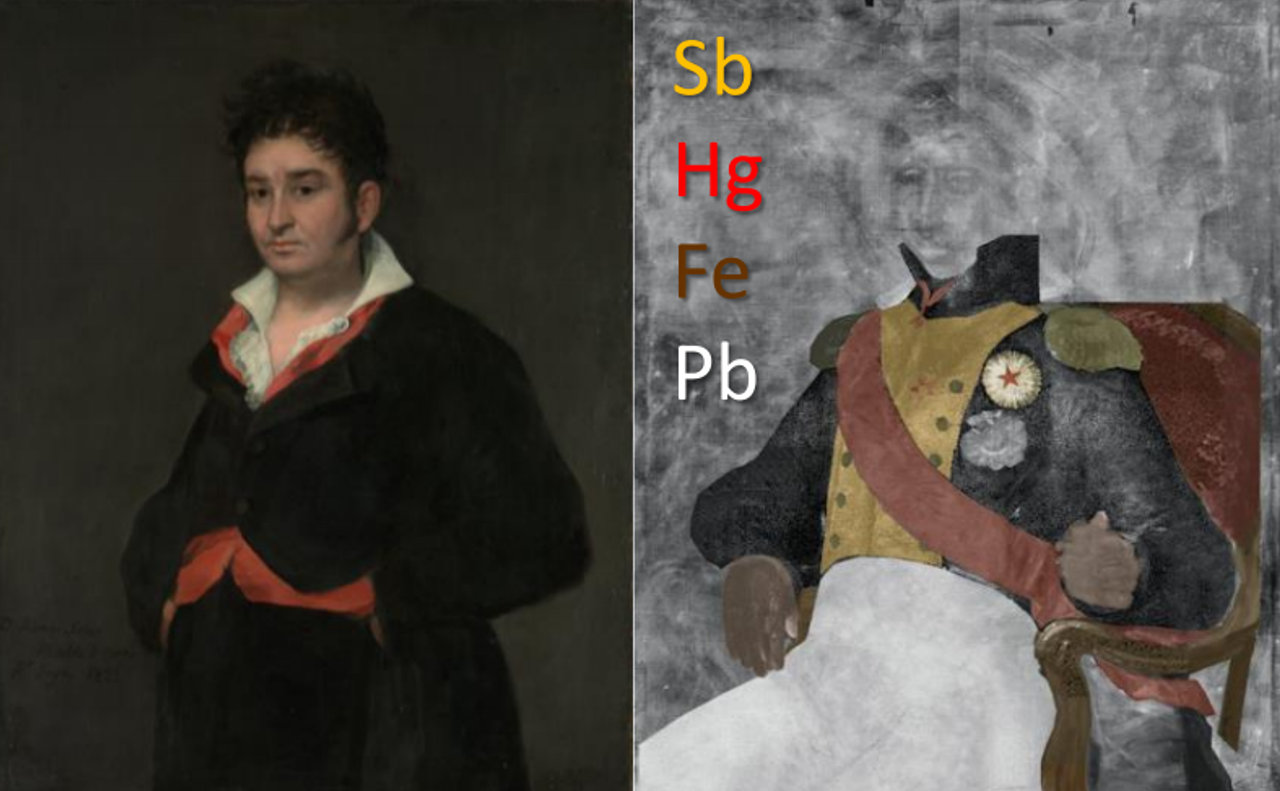
The BRUKER M6 JETSTREAM non-destructive micro-XRF can determine the chemical composition of paints not only on the top, visible layer, but also in a possibly existing bottom layer composition.
After mapping the chemical composition of the object, the instrument presents the measured elements in a map-like manner. Based on the measured data, we can even associate colours with an element, generating a ‘colourful radiograph’. This makes the digital reconstruction of a lower, older painting possible without the removal of the upper, younger layer.
We recommend this type of examination in cases when a very high resolution is required to determine an element. Naturally, the instrument is suitable for other types of objects too, not only paintings. The 100-micrometre accuracy is excellent for identifying the materials of archaeological objects as well as for examining miniatures of illuminated manuscripts.
We are planning to share plenty of interesting researches during our daily work, because art is the secret itself and BRUKER M6 JETSTREAM can take us a step closer to solve it.
New in the laboratory: LIBS laser elemental analysis
Laser-Induced Breakdown Spectroscopy (LIBS) is a modern analytical technique based on atomic spectroscopy that determines the elemental composition of a material quickly and accurately.
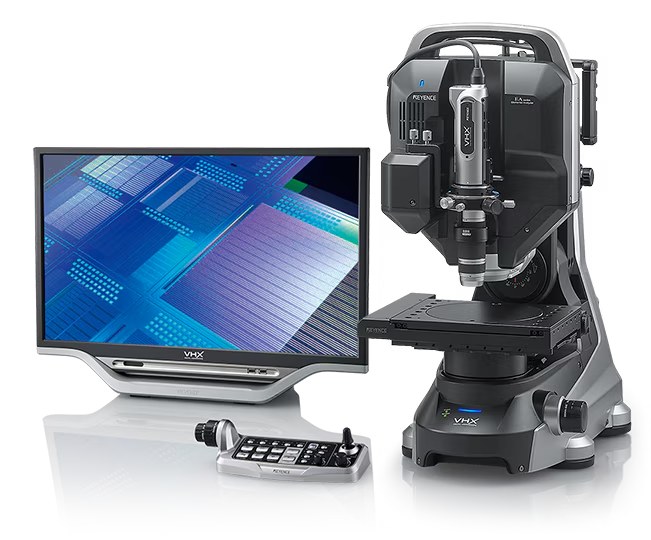
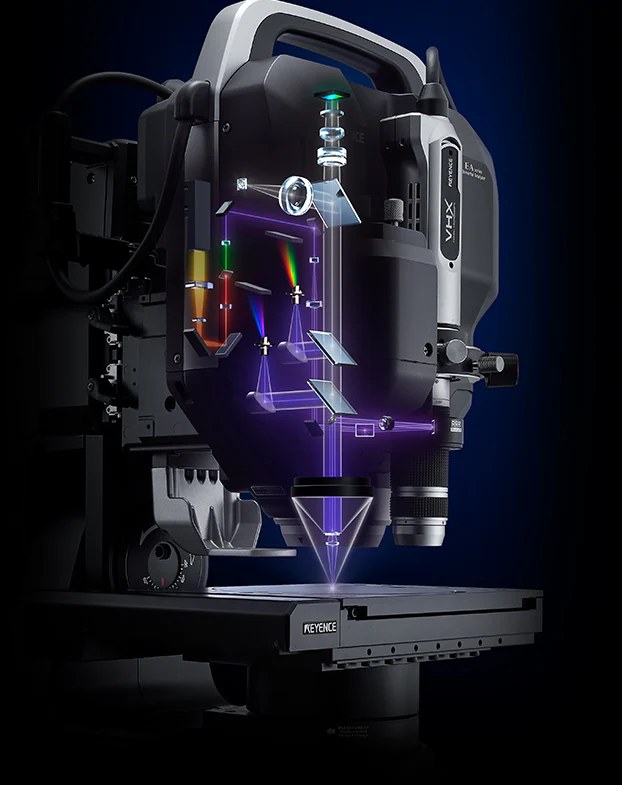
Principle of operation
The method is based on a focused laser pulse of high energy density. The laser beam vaporises a microscopic volume of the surface and creates a highly excited plasma. As the plasma cools, the atoms and ions of the elements present emit light at characteristic wavelengths. The instrument splits this light into its spectrum with an optical grating and identifies the elements from the spectral lines.
Sample handling and measurement
One of the greatest practical advantages of LIBS is that no sample preparation is needed: no sampling, acid digestion or complex laboratory preparation – the object can be placed directly under the microscope. The measurement is extremely fast: a single laser pulse takes only a few milliseconds, so a complete elemental data set is obtained within seconds.
The method is micro-destructive: the laser leaves a crater of a few tens of micrometres on the surface, barely visible to the naked eye. This has practically no effect on the integrity or appearance of the object, so it can be used safely on unique, valuable pieces.
What does it measure, and how precisely?
LIBS detects almost every element of the periodic table – simultaneously – from the lightest (e.g. carbon, sodium, magnesium) to the heavy metals (e.g. lead, gold). This makes it an important complement to XRF, which has only limited sensitivity to light elements. The method provides:
- qualitative results: precise identification of the elements present;
- quantitative results: with proper calibration, the weight percentage of the elements is determined from the intensity of the spectral lines.
The detection range is very wide: from trace elements at a few ppm (parts per million) up to main components at 100%. The diameter of the focused laser beam is typically 10–50 micrometres, so even a single pigment grain, a tiny inclusion or a surface irregularity can be examined separately.
Layer analysis
With successive laser pulses fired at the same spot (multi-pulse technique), LIBS also provides a depth profile: the composition of, for example, the varnish, a later overpaint, the original paint layer and the ground can be followed layer by layer. No vacuum is needed – the measurement works at normal atmospheric pressure.
Software evaluation and its importance in painting examination
The analysis is supported by advanced software: the built-in database compares the measured spectral lines with reference data instantly, so the elements are identified at the moment of measurement.
This is why LIBS has become an important tool of archaeometry (the material analysis of archaeological finds and works of art). In painting examination and in detecting forgeries it is particularly useful because it quickly reveals modern materials – such as modern pigments and fillers – that did not yet exist at the presumed date of the painting.